Helpful Blogs

Building an ADHD Toolkit: Small Supports That Can Make a Big Difference.
Living with ADHD can involve a frustrating gap between knowing what you need to do and being able to make yourself do it. You can know the email needs answering. You want to answer the email. You can have the laptop open, the email staring directly at you, and somehow find yourself reorganising a drawer instead... That isn't necessarily a lack of motivation, effort or care. ADHD can affect executive functioning, the collection of processes involved in starting tasks, shifting attention, organising, remembering, regulating impulses and following something through to completion. Supports and scaffolds can play a big role in making those processes more manageable. The aim is to find practical supports that make it easier to work with your brain. There isn't one ADHD toolkit or strategy that works for everyone, so what helps can depend on the person, the task and even the day. Here are a few things I personally have found helpful. 1. Give your body something to do Fidgeting isn't always a distraction. For many people, movement or tactile input can support regulation, alertness and attention. That might mean clicking a pen, moving a foot, twisting a ring, doodling, standing, pacing or using a purpose-designed fidget tool. The useful part is finding the right kind of input for both the task and the person. If you're listening in a meeting or classroom, you might prefer something quiet, discreet and repetitive that doesn't demand much visual attention. When you're trying to regulate while overwhelmed, you may want something with more resistance, weight or Safe Ouch input. There is no universally perfect fidget. A more useful question than "What's the best fidget for ADHD?" is: "What kind of input helps me do what I'm trying to do?" 2. Borrow another person's presence Body doubling can sound slightly ridiculous until you discover that it works for you. Body doubling simply means doing a task while another person is present. They don't necessarily need to help. They might be doing their own work beside you, sitting at the kitchen table while you sort paperwork, or joining you on a video call while you both tackle completely different jobs. For some ADHDers, that little bit of external structure can make starting and staying with a task significantly easier. You don't necessarily need someone to do the task with you, although I won't lie, that can be an added bonus. Sometimes you simply need someone to be there while you do it. A variation that I find incredibly helpful is when someone else starts doing the "thing", and then I join in. Sometimes seeing someone else begin creates enough momentum for my brain to find its own way into the task. 3. Make the task smaller "Clean the kitchen" sounds like one task, but it can actually contain a whole series of smaller actions: Take the cups to the sink Put rubbish in the bin Load the dishwasher Wipe the bench Put away five things When a task feels enormous or has no obvious starting point, breaking it into tiny, concrete actions can reduce some of the executive-function load. If your supposedly "tiny" first step still feels impossible, make it tinier. "Do the laundry" can become "put the basket beside the washing machine". That's allowed. Starting counts. 4. Add novelty on purpose Sometimes the thing your brain needs is a little more interest. Try changing location, putting music on, racing a timer, working outside, using a ridiculous pen, turning something into a competition or doing the boring job in an unusual order. Novelty isn't a magic ADHD cure, and what works one day may do absolutely nothing the next. That's okay. The goal is to have enough options available that when one stops working, you have something else to try. 5. Get it out of your head Working memory can make "I'll remember that" an occasionally optimistic strategy. Externalising information can help. Reminders outside your head might include: visual timers and alarms calendars and whiteboards sticky notes and checklists baskets where things actually get used leaving an item somewhere visible A support doesn't have to look beautifully organised to be useful. If putting tomorrow's medication beside your coffee cup means you remember it, that system is doing its job. 6. Reduce the number of steps Sometimes making a task easier starts with looking at how many steps sit between you and doing it. Could the thing live somewhere else? Could you have two of them? Could the lid come off the basket? Could the supplies stay where you actually use them? Could something be automated? Could someone else do that particular job? Removing one tiny piece of friction can sometimes achieve more than another elaborate productivity system. 7. Use timers differently A timer can create an edge around something that otherwise feels endless. You might try: "I'm going to do this for five minutes, then I can stop." You may continue, or you may not. Both are fine. For brains that struggle to estimate or feel the passage of time, visual timers can also make an abstract concept like "15 minutes" much more concrete. 8. Build transition supports Sometimes the difficult part isn't the activity itself. It's switching. Leaving the house, getting into the shower, stopping work, going to bed, moving from gaming to homework, finishing one project and beginning another can all involve a transition that needs its own support. Warnings, countdowns, routines, music, timers, a sensory tool or simply allowing more transition time than you think you "should" need can help. The transition is part of the task, so it deserves to be planned for too 9. AI can be a useful support As a very non-techie human, this feels slightly strange to say, but I find ChatGPT incredibly helpful for scaffolding my ADHD brain. One of the biggest things for me is that I don't have to organise my thoughts before I start. I can simply talk into it, often in a completely jumbled stream of consciousness, and it can help me sort those thoughts into something I can actually work with. I use it to brain dump, organise ideas, break overwhelming tasks into smaller steps, make lists, prioritise what needs doing, draft things when I'm stuck at the starting line and remind me about things I know I'm likely to forget. I also use it for everyday ADHD things. I can tell it what's in my fridge and pantry and ask what I could make for dinner. I can photograph something I've bought and forgotten what I intended to do with it. I can ask it to turn a huge job into the first three manageable steps, give it a ridiculous list of things I need to get done and ask where to start, or turn a rambling voice dump into an organised document. It can also help when I know exactly what I mean but can't quite find the words to explain it. I can throw the half-formed thought at it and work backwards and forwards until we've landed on what I was actually trying to say. And I can come back to things. That has become surprisingly valuable for me. My ChatGPT has become a bit of a brains trust. I can return to an idea, project or decision we've worked through before and pick up the thread again, rather than relying on my brain to remember every detail or starting from scratch each time. That continuity can take a surprising amount of load off my working memory. Sometimes I even use it almost like a form of body doubling, working through something alongside it step by step instead of trying to hold the entire task in my head at once. You don't need beautifully constructed prompts either. Mine are frequently just me talking. For my ADHD brain, that's the real value of AI. It gives my thinking somewhere to land, helps me sort through it and gives me somewhere to return to when my brain has already moved on to the next 47 things. 10. Stop judging the "weird thing" that works This might be one of my favourites. If you need shoes beside the front door, put them there. If you concentrate better while moving, move. If you need three alarms, use three alarms. If folding clothes means they'll sit in a basket for three weeks, but unfolded clothes in labelled tubs actually get put away, perhaps labelled tubs are the system that works for you. A useful support doesn't have to look conventional. It simply needs to support you. Your ADHD toolkit should look like yours Fidget tools can be an incredibly useful part of an ADHD toolkit, but they're only one part. Your toolkit might include movement, sensory input, body doubling, timers, medication, headphones, checklists, routines, novelty, environmental changes, technology, professional support or something wonderfully specific that you've discovered through trial and error. And it will probably change. The tool that works brilliantly this month may suddenly lose its appeal. Another one might become indispensable. That change is useful information about what your brain needs at that point in time. Sometimes the most useful question isn't "Why can't I just do this?" It's: "What could make this easier to do?" Keep noticing. Keep experimenting. Keep the things that help. - Jo
Read moreHelpful Blogs

Virtual Care for Neurodivergent Families: A Guide to Getting Help Without Everything Falling Apart
Getting help shouldn't mean everything falling apart. Jo shares the virtual care options that actually work for neurodivergent families including VVED, 13SICK, and Healthdirect.
Read more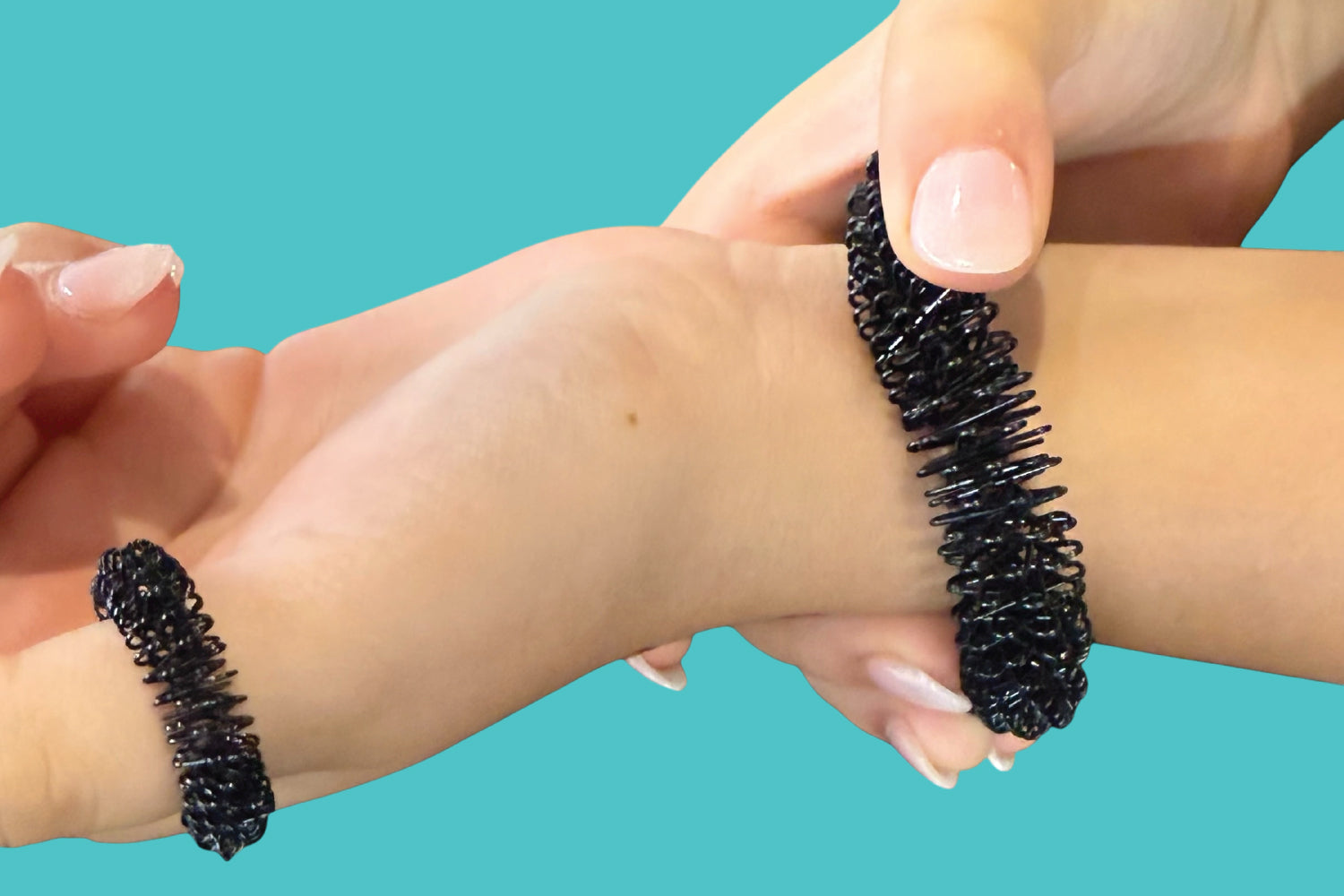
Let's Talk 'Safe Ouch' & why it's helpful *content trigger warning*
It has taken me a while to share as it is a tricky topic for me to openly talk about. I very much hope for grace and kindness as I brave this topic. I frequently field questions from individuals & I’m comfortable to do so one on one. I feel privileged that individuals trust me to discuss it. However, it is entirely different to publicly touch on the topic. I hope its ok for you that I am. I genuinely apologise & understand if it is not ok for you. Please feel free not to read on… especially if it will trigger anything personally, as that is not my intention. It is not a warm and fluffy topic I know… It is an IMPORTANT one though, so brave I will be! I also hope that it helps those who struggle be 'kinder' to themselves & validates the very genuine need for strong sensory input. First I’ll share with you a little about our new tool . Then I will unpack a little more about the ‘why’ of these tools from my own perspective… Our new spiKEYring The drive to develop this tool specifically has been born out of a need for an ‘on hand’ tool that does not need to be worn on wrist or finger, like our wrist and finger spikeys, due to sensory aversions. We also recognised that having a tool that can double as a ‘picking’ support would be helpful for many. So off to the drawing board we went…. Our spiKEYring has a fidget loop securing 2 detachable double sided sensory supports for tactile input, ‘picking’ support and 'hurt' without harm. It is a TWIN SET on a secure fidget loop featuring : a double sided textured flexible pad with silicone bristles which is both sensory and a helpful picking support. & a double sided textured pad with PVC 'spikey' bristles providing 'ouch' without harm & also picking support. Link to product For many, including myself, strong sensory input (pain) is something that assists with regulation, relieving emotional distress and assists in ‘decompressing’ in an moment of overwhelm. Many have expressed to me the purpose of the NSSI isn’t to harm themselves or cause injury, even though that is often the outcome. Some examples of high sensory input or NSSI that we get asked to find replacements for are skin picking, pinching, scratching & slapping face, digging pen into leg, hair twirl/pulling, eyelash pulling, digging nails into palms, burning, biting, chewing, head hitting and cutting. What can often then follow is shame, risk of infection, injury and distress for both the individual and/or for loved ones. I have certainly found it one of the most challenging things to journey through as a family. For us, it has created a space for open conversations, enabled insight & validation and has gone on to inspire our passionate interest in developing these tools. Pain causes the central nervous system to release the ‘feel good’ endorphins, can be grounding and a helpful thought or pattern interupter. Some have shared it “helps divert the emotional pain in their head” and for others that it assists in breaking feelings of numbness or feeling ‘lost’. Also shared is that physical pain can be ‘easier’ to deal with than the emotional pain. In writing this, I also reached out to Jade, long time Kaiko connection & also the original inspiration for our wrist spikey. This is what they shared about their personal experience. “For me it's mostly about control. Have ASD etc and chronic pain, that is all out of my control. It is incredibly difficult and frustrating to deal with. Having the spiKEYring, for example, gives me chances to express my frustration, my rage and sometimes to inflict pain when I want it, not when my body decides to give it to me. That pain also makes sense to me. When I use these safe self-harming options to cause pain I have a sensory loop of "my hand hurts, it hurts because I used the spiKEYring" and that is relieving. Compared to emotional dysregulation where you feel upset without context at times. I love that these products exist!“ Jade April 2024. (sharing with permission) Although the ‘why’ behind each individuals’ journey varies, having supports that can ‘safely’ provide high input/ouch can be immensely helpful. Not the only strategy for support of course, but a vital part of the tool kit for many. Finding various ‘safe’ ways to meet this genuine & valid sensory need has therefore become a focus for us and we are thrilled to share with you the latest arrival - the spiKEYing. So many of our clients vulnerably share with us their journeys navigating this complex sensory need. Our hope is that having tools on hand that are discreet, provide ‘ouch’ without breaking the skin and also some that provide ‘heavy’ work for the body (such as resistance) provide the support needed in those moments. Many also find extreme cold helpful in a similar way. Placing metal fidgets in the fridge is worth trying. Extra minty and/or spicy things also can provide similar benefit. The key is having ‘safe’ options, in addition to partnering with your GP &/or clinical team to identify and navigate additional supports, referrals and resources. In addition to our new spiKEYring, we have developed a number of other wearable tools. We have a dedicated section on our website for harm minimisation tools. Watching the video on the product pages regarding ways to use each tool is super helpful as, often, the most effective way is the lest expected or common way of using. I am also happy to confidentially field questions via email or phone if that is helpful for you. We also have a number in the ‘pipeline’, including a kit specifically created for those that struggle with trichotillomania and a large ‘spikey’ bead that will be used in multiples to create a hand fidget, similar to our galaxy fidget, but with ‘ouch’. We welcome suggestions anytime & love to co-design tools. Thank you for allowing me to talk about this & I hope this has been helpful in some way. Jo Some other products that provide we have on our website that provide 'safe ouch' or assist with other forms of NSSI (such as hair pulling) are our... Spikeyring Spikey Hand Rollers - 100g & 285g Finger & Wrist Spikeys - we have a set that has a wrist spikey and both sizes in finger spikeys). It is important to pick the correct size for these, see the descriptions on product page. Also important to watch the videos on how to use both styles as the most helpful & ouchy ways are the least expected/thought of. Calm Buddi (very ouchy) Detonator (textured picking, slightly abrasive base) Pick 'em range - support replacement of skin picking, hair pulling and popping. Kaiko Resistance Bands Spikey peanut massage roller and ball Chain maille range (picking supports) Speks Original Silver Magnets (picking support) Necklace or Hand Caterpillar Noomi Squeezibo Kaiko Extreme Squishy range Extreme Lost Your Sh!t Kit Harm Reduction Kit Ultimate Picking Support Kit & can be found in our safe ouch/harm minimisation, picking supports, regulation & hair focused stimming sections on our website. If you have specific questions feel free to reach out to me at jo@kaikofidgets.com
Read more
Neurodivergent ≠ Broken
Neurodivergent ≠ Broken ADHD is a bit like trying to solve a Rubik’s Cube (and “try harder” is not the solution)If you are ADHD (or you’re neurodivergent in any flavour), you’ve probably heard some version of:“Just focus.”“Just be more disciplined.”“It’s not that hard.”And honestly… respectfully… F off! (eek ...did i jsut type that lol) Because working with an ADHD brain is a bit like solving a Rubik’s Cube.It’s not simple.It’s not linear.And it’s definitely not something you solve by forcing it. You’re not lazy You’re dealing with a complex system.This is the part I wish more people understood.ADHD isn’t “not trying hard enough.”It’s living inside a brain that’s running a very complex operating system — where everything affects everything.You fix one side… and another side breaks.You finally get productive and smash through a task? Amazing.But then suddenly:- you forgot to eat- you forgot to drink water- you didn’t notice you were overstimulated- you didn’t go to bed- your sleep crashes- your nervous system crashes- and then your whole week crashesAnd then you’re sitting there thinking:“Why can’t I just function like a normal person?” It’s not because you’re broken.It’s because you’re running a system that doesn’t respond to brute force.You don’t solve a Rubik’s Cube by forcing it.You solve it by understanding how it works.You learn the patterns.You learn the algorithms.You learn what happens when you move one piece, because you know it affects everything else.And ADHD is the same. You don’t “fix” an ADHD brain by trying harder.You support it by understanding the system. It’s not discipline. It’s dopamine.This is one of the biggest mindset shifts that changed my life:ADHD brains don’t run on discipline.They run on dopamine, novelty, interest, urgency, and connection.So if you keep trying to force yourself through life using neurotypical strategies (routine, willpower, consistency)… you’re basically trying to run Android apps on an iPhone.Not broken.Just… different operating systems. Different operating systems doesn’t mean one is “better”This is how I explain ADHD to people:There are Apple phones and there are Android phones.One isn’t better than the other… although yes, some people will absolutely argue about it like it’s a religion.But they are different.They behave differently.They respond differently.They need different systems.And honestly? Brains are the same.Some people have blue eyes.Some people have green eyes.And some people have neurotypical brains… and some people have neurodivergent brains.Different wiring. Different operating system.So what do you DO with that?This is where I shift into my O.T. brain:We strip tasks down.We break activities into pieces.We make things achievable.Because the ADHD brain doesn’t cope well with the “whole cube.”It copes with one move at a time.1. Break it down into bite-sized pieces (seriously… tiny)For me, this is the biggest one.When I look at my house and I see doom piles, a kitchen bench that looks like a tornado hit it, dishes everywhere, laundry mountains, and 47 unfinished projects…My brain doesn’t go: “Let’s calmly work through this.”My brain goes: “This is too much. I am failing at life. Burn the house down.”So instead of telling myself I have to do everything, I give myself permission to do one tiny piece.Not “clean the kitchen.” More like:- Put the cups in the dishwasher or - Clear the kitchen table for 3 minutes Because once I start, the system starts moving.And sometimes I stop after 3 minutes and that’s fine.Because 3 minutes is still progress.And progress is the goal, not perfection.2. Use novelty (because your brain is basically a dopamine-seeking missile)Sometimes the task that needs doing is the one that has been staring me in the face for days.And my brain hates it now.It has become The Task Of Doom™.So I don’t start with that task.I start with a different task — something slightly more interesting, more novel, more satisfying.Because the goal isn’t “do the most important thing first.”The goal is: Get dopamine into the system so the engine turns on.Once my brain is engaged, I can often swing back around and tackle the harder thing.It’s like warming up the car before you try to drive it. 3. Reward-based motivation is not childish. It’s strategic.Sometimes I will absolutely bribe myself.And I used to feel bad about that. But now I’m like… why?If my brain responds to reward and anticipation, then I’m just working with my system.So yes, I might say:“After I do X, I get my ice cream.”Or:“After I do this, I can sit down use a pick ‘em pad.”That’s not weak.That’s not lazy.That’s literally understanding (my) algorithm. Angie (one of my incredible team and deliciously referred to as Jo’s ‘Coordinator of chaos’ gave me a gift of this in ACTION… a small cube timer that when flipped automatically starts a timer – each side with different time amounts … Choose your own adventure for timer length. SOOOOO much dopamine & practical support in this tiny tool! 4. Transitions are HARD. So build a dopamine bridge.This is a personal one.I struggle massively with transitions.Getting out of bed.Getting into the shower.Switching tasks.Starting the ‘thing’.Sometimes it feels like my brain is physically stuck.So one thing that works for me is having something I’m excited about on the other side of the transition.For example: If I want to get into the shower but I’m frozen, I’ll tell myself: “After the shower, I get my favourite breakfast.” And that anticipation helps me skip over the overwhelm.5. Learn the signs of overwhelm… and give yourself permission to STOP.ADHD brains often don’t notice we’re overwhelmed until we’re already past the point of no return.And then we do the classic spiral:Get overloaded.Push through anyway.Melt down.Crash.Beat ourselves up for crashing.So now I try to notice earlier signs — irritability, zoning out, sensory overwhelm, brain fog, emotional reactivity.And when I see those signs, I try to step away.Not because I’m failing.But because I’m listening to my system.6. Body doubling is actual magicBody doubling is one of the best ADHD strategies out there.You don’t do the task alone.You do it with someone nearby.Not necessarily helping you… just existing alongside you.Because ADHD brains respond to connection, presence, and momentum.I call this my ‘Jaytee effect’ (aka: how my gorgeous team member hacks my brain lovingly). Jaytee has figured me out completely. Aside from gifting me the best drink bottle ever she also knows how to assist me to START tasks im struggling with. Image of a hilarious and accurate custom water bottle saying "Drink some water Joanne or you with f!#@ing die! " If I’m overwhelmed, she doesn’t say: “Jo, you need to do this.” Because that triggers PDA... and my nervous system immediately goes: HARD NO! Instead, she just starts doing a tiny part of it.And then my brain sees it and goes:“Oh… that looks doable.”“Oh… that looks fun.”And suddenly I’m doing it with her.Not because she forced me.But because she created a doorway into the task that didn’t trigger resistance.That is real support. I guess the point is: you don’t need to fight your brain.ADHD can be incredibly challenging.It can feel exhausting.It can feel like you’re failing at things that other people seem to do effortlessly.And it’s easy to feel broken.But you’re not broken.You’re running a different operating system.And once you understand your patterns — once you learn what helps and what crashes the system — you If Just a gentle encouragement to be kinder to yourself and not force yourself into a ‘neurotypical mould’.That way you can journey toward building a safe space/world that actually works for your wiring. Final take-home: Solve one side at a timeIf your life feels like a Rubik’s cube right now, I hope this is a little reminder that:You don’t have to solve the whole cube today.Just pick one side.One small move.One tiny step.And if you 'fix' one piece and something else slips? That doesn’t mean you failed.It means you’re learning the system. And that is progress & more than ok! And if you are a 70’s or 80’s kid like me lol … you know the ultimate workaround hack: peel the stickers off! … & ‘solve’ it a different way lol. Love Jo Some additional ADHD Glitter Nuggets I’ve gleaned over the years (Expert-Backed Sprinkles of Wisdom) These are simple, practical ADHD-friendly strategies that come up again and again across ADHD experts, coaches, and lived-experience communities. They’re not about fixing you — they’re about supporting your system. Ultimately… trust your gut.. (some below may not be ‘true’ for you) … and be kind to yourself! · 🕰️ Make time visible: timers + alarms help with time blindness · 🍅 Try Pomodoro blocks (e.g. 10–25 mins focus + short breaks) to build momentum · 📌 Break tasks into *ridiculously small* steps (make the first step almost too easy) · ⏱️ Add buffer time between tasks (transitions take longer than your brain predicts) · 🚫 Reduce distractions in your environment (notifications off, visual clutter down) · 🎧 Use sound strategically (noise-cancelling, white noise, or a consistent focus playlist) · 👣 Create a ‘start cue’ ritual (shoes on, playlist on, desk cleared = brain gets the signal) · 📅 Externalise memory: calendars, reminders, notes, checklists (your brain is not a storage device) · 🧠 Work with dopamine: novelty, urgency, interest, and reward are valid tools · 🔄 Build micro-routines (5 minutes a day beats ‘all-or-nothing’ perfection) · 🌿 Mindfulness / breath resets can help interrupt spirals and emotional overwhelm · 🌤️ Take planned breaks before your brain forces a crash · (use image of a cog as an icon) Have sensory supports on hand/on person to assist with motivation/focus/regulation in the ‘moment’ · 🤝 Body doubling is not cheating — it’s a legitimate strategy · 💡 Remember: ADHD also comes with strengths (intuition, creativity, fast problem-solving, deep passion) Kaiko translation: it’s not about trying harder. It’s about building a system that actually works for your wiring.
Read more
From the Schoolyard to the World Stage: How a Young Entrepreneur is Changing Lives with Sensory Tools
It started with schoolyard teasing—but Kai turned that moment into a million-dollar idea. Recently featured on The Morning Show with Larry and Kylie, Kai and his mum Jo shared how Kaiko Fidgets grew from one homemade tool into a life-changing brand helping thousands around the world.
Read more
Jo chats ‘all things’ Sensory Regulation with Monique & Michelle on the The Neurodivergent Woman Podcast
The podcast that deepens your understanding of neurodivergence through compassionate interviews, practical strategies, and the latest research—empowering you to thrive in a neurotypical world with neurodivergent joy. Jo chats with Monique & Michelle through the lens of her lived experience.
Read more
Chew Supports … where to start??
I get asked about chewing and supports frequently. So i thought I would share with you my tips and thoughts. Understanding what is often behind the chewing can be helpful…. When trying to emotionally regulate/calm it is instinctive to be ‘oral’ . Our brain is wired to seek oral input to calm/regulate/stabilise… it’s why we often comfort eat, chew nails, fingers, tops, clothes, even ‘over’ talking can be based in this need! I’m sure it is a ‘story’ many of us are familiar with. Also, crunchy foods such as carrots, apples and things like chewing gum & chewy lollies are an instinctive ‘go to’ for many. These become an even more powerful tool when we understand why so that it may become a conscious tool we seek when needed. It’s helpful to know that our core stabilisation starts in the mouth. Chewing is often a direct response to needing to stabilise core/decrease cortisol /adrenaline and brain’s way of trying to increase focus/regulate. Sensory tools (including chewing) do greatly assist with reducing anxiety for most. What actually happens in the brain is .. When anxious or stressed our survival/instinctive part of brain SWITCHES ON (amygdala) & releases cortisol and adrenalin which SWITCHES OFF the front part of the brain (frontal cortex which is essentially responsible for executive function (learning, thinking , reason etc) ….. SO when we are anxious or stressed or under ‘threat’ ADRENALIN & CORTISOL are high = FLIGHT FIGHT ON / EXECUTIVE FUNCTION OFF MOVEMENT activates the part of the brain that DROPS ADRENALIN & CORTISOL - any movement does this which is why chewing & fidgeting are awesome, as are big movements such as tumbling, jumping, walking etc as ADRENALIN & CORTISOL lower, the executive function (front part) of brain can SWITCH BACK ON and allow concentration/function/learning/ listening etc The jaw, being the closest moving joint to the brain, is the most ‘efficient’ body movement & why JAW MOVEMENT is often the brains ‘go to’ when anxious. Of course, for some, chewing gum is not an option (texture, taste, additives etc etc) and that’s perfectly OK. Honestly, the KEY is the jaw movement or CHEW factor – so anything that allows a rigorous chew is a great alternative. There are many brands of chew supports on the market. We exclusively stock the ARK range. We like that they are made in the USA with strict testing and safety information. We love that they are designed by a team of therapists. Chewing as a sensory support is something that for many continues into adulthood and is perfectly valid, so we highly rate the fact that they have a range suitable for teens and adults. Finally, my favourite part is that ARK come in a range of textures, thicknesses and strengths – Standard (softest), Medium (XT) and Firm/toughest (XXT). “I want to try a chew support, where do I start?” I typically like to explore what the person is using intuitively, as that will give important information about the shape or style of chew support to try. If putting items into the back of mouth and using molars is the ‘go to’ then something that is long in shape so that it reaches the same area is a helpful start. If, for example, chewing on skin, hands, straws, bottle tops I tend to suggest chew supports that allow ‘collapse’ on chew, such as the ARK hollow range. Necklace Hollow Bite Tube by ARK HAND Hollow Bite Tube by ARK ARK HOLLOW & Textured P Grabber Oral Chew I am chewing through my chew supports really quickly, any suggestions?” I also think it is worth trying the hollow variety above for those that are ‘aggressive’ chewers and going through chews quickly. Counter intuitively, I find often when chews are getting destroyed it’s because the ‘mouth’ isn’t getting the right sort of oral feedback it needs i.e. it is seeking ‘collapse’ (similar to chewing on skin, cheek, straws, gum etc ) so it chews HARDER into the chews trying to achieve the collapse …but not getting it …so chewing even harder which results in its quick demise. This is not true for all but certainly worth considering. The ARK pen and pencil toppers can also be used as a hollow chew support when taken off the pen/pencil. They make a terrific small in pocket size hollow chew. ARK Write-n-Bite Chewable Pencil Topper ARK Write-n-Bite Chewable Pen Topper “Which strength should I choose?” This is so personal & depends on the style and degree of chewing. I tend to suggest starting with the middle (XT) strength, unless they are a ‘light chewer’ then the softest (standard) strength is usually the most tolerated. The ARK Chewth Pick (both the smooth and textured varieties on our website) actually have a packet of 3 strengths in one which is great for testing strengths if unsure. These are small chew supports so might not suit everyone. “What style should I try?” Again, so dependant on the individuals age, style of chewing and purpose of the chew support. There are wearables such as necklaces with breakaway clasps & wrist chews. Also, ARK have a handheld range and chew supports that are pen & pencil toppers. Often, it’s a combination of these that works well. Preference for shape (which impacts the experience in oral input) and texture (smooth or textured) also important to consider in selection. It is helpful to understand that chew supports are consumables and do need replacement, sometimes regularly. Once you find the supports that work best, having duplicates as backups an excellent idea. If the chew is showing signs of wear/deterioration it’s time to replace. It is also important to regularly wash them. Warm soapy water works well. I hope this helps in you embracing the benefits of chew supports, whether it be crunchy foods, chewing gum or tools such as the ARK range. JO
Read more


Kai's Interview with Uplifting Voices
Kai Seymon Interview “I started making fidgets for myself when I was being teased at school for using kiddie like fidgets (Tangles) to help me with my anxiety.” – a talented teenager with autism and dyslexia Kai uses fidgets to help him with his anxiety. At age eleven, when he could not find fidgets appropriate for his age, he started designing and making his own. Soon his creative fidgets were in high demand. With the help of his family, Kai started Kaiko Fidgets, a business that designs and sells a wide range of discreet and noiseless fidgets for both kids as well as adults to assist with anxiety, focus, and mental health. His parents Joanne and Mark and little brother Kobi help and support Kai in his demanding endeavor. Kai earned a spot as a finalist on Australia’s 7 News ‘Generation Us’ Small Business Young Achiever Victorian Awards. The interview with Kai Seymon was conducted by Uplifting Voices in March 2021. More Info Q: How did you get the idea to make your own fidgets? K: I started making fidgets for myself when I was being teased at school for using kiddie like fidgets (Tangles) to help me with my anxiety. When I took them to school rather than pick on me other kids wanted one too. Mum then took me along to some markets on weekends where I started selling them. We soon realised that there is very little available that is appropriate for older children and adults so together with my mum we have created dozens of designs to suit different needs. Q: What do you love about running your own business? How is your family helping you in this effort? K: Mum and dad helped me design them in the beginning and experiment with designs and techniques. They also took me to markets and did a kids in business 12 month course with me to help me learn how to run a business. MY little brother Kobi helps make some of the easier designs. For the past year both mum and dad have gone full time in the business as it grew too big to do as just a hobby. Q: What is the best thing you love about your school? How do you balance your time between school and business? K: That is has supported learning classrooms where all the lessons are adjusted. I’m in a class with kids who also struggle like me and that makes me feel less embarrassed. I love being to help other kids in class too.I do fidgets when I have time. Mum & dad don’t pressure me so its my choice when I make them. dad makes a lot now too, we often sit together doing them. Q: What are your other hobbies? K: I love building Gundam and painting miniature models like Warhammer. I also love Animae, Virtual Reality games and chess. Q: What do you like to do when you are with your family/friends? K: I like to play games, my favourites are Monopoly and Chess. Q: Any special message for our community? K: Don’t give up on your dreams and l don’t let others tell you cant do something.
Read more
The Story Behind Kaiko Fidgets — In Our Own Words published by Mini Marketa
Andrea from Mini Marketa reached out earlier this year as part of her Meet the Maker series — a project celebrating the people behind the products kids and families rely on every day. We said yes, and what came back was one of the most honest, generous accounts of how Kaiko began that we've ever seen in print. Andrea captured something we sometimes struggle to put into words ourselves — the real reason these tools exist, where they came from, and why design and dignity matter so much to us.
Read more
Once Bullied, Neurodivergent Teen Turns His Pain into Purpose
Long chastised by peers for his differences, Kai Seymon’s fidget tool business, Kaiko Fidgets became a success that earned him recognition on the world stage when he was runner-up at the 2025 Global Student Entrepreneur Awards. He should have been nervous. Terrified, even. Yet, as Kai Seymon stood on stage at Entrepreneurs' Organization's Global Student Entrepreneur Awards (GSEA) finals in Osaka, Japan, this year, flanked by some of the world’s most ambitious young founders, contentment washed over him. “Whether I came sixth or first,” he recalls, “I already felt like I had won.” For the 18-year-old from Melbourne, advancing farther in the competition than more than 1,400 other young entrepreneurs symbolized not only business success but personal validation. Not long before he surged through GSEA’s local and regional competitions to reach that stage, Kai was often bullied and harassed at school for using fidget toys to manage his autism and dyslexia. In Japan, though, he was being celebrated for revolutionizing the very tools that once made him a target. His company, Kaiko Fidgets which he co-founded with help from his parents at just 11 years old, produces sleek, age-appropriate sensory tools that support the mental health and emotional regulation of neurodivergent individuals. What started as a homemade fix is now a thriving business. More importantly, the company has helped reshape lives all over the world. From Isolation to Innovation Kai struggled to keep up in class throughout his life. Reading, writing, and spelling often felt like insurmountable tasks, leaving him feeling out of place. To help him focus, he used fidget tools in school. The constant motion of fidgeting heightens executive function in the brain, and helps reduce adrenaline and cortisol levels, which can hinder focus when elevated. But the bright, toylike trinkets he used seemed designed for much younger children and only drew negative attention from his adolescent peers. One classmate even smeared wasabi in Kai’s eyes. When Kai returned home after incidents like that, he told his mother, Joanne, that he felt he had no purpose in life and nothing to contribute. “Kids can be fairly brutal,” she says. “You are not broken or less than, but when you are wired differently, your brain thinks differently, you respond socially differently, and you process language differently. All those things make you stand out. It was pretty harsh.” The wasabi’s sting penetrated deep, but the moment’s cruelty brought clarity. If the tools Kai needed did not exist in a form that helped him feel accepted, he decided he had to make ones that would. Drawing from his own sensory needs — and with support from Joanne, who has a background in occupational therapy — Kai began experimenting with parts like bike chains to create discreet, durable metal fidgets. When he brought the prototypes to school, kids who once teased him asked if they could buy one, awed that he had designed them himself. Feeling acceptance for the first time his life, Kai obliged — until administrators made him return the money, citing a ban on selling products on school grounds. So, he soon took his fidgets to a local market and sold 76 units in a single day. “I saw my kid smile for the first time,” Joanne says. “I saw something that I had not seen in him since he started school, and that was genuine worth. He had purpose.” Kai took a hands-on approach to crafting his products from the company's earliest days. Not Child’s Play That spark ignited a booming business. Today, Kaiko Fidgets offers an array of products to a passionate customer base of families, therapists, schools, and neurodivergent individuals. Most of the company’s tools are handcrafted and some are even co-designed with Kai’s fans and customers, like a bookmark-fidget hybrid conceptualized by a 10-year-old dyslexic girl. Kai and Joanne sent her prototypes and used several rounds of her feedback to shape the final product, which helped her focus as she read. “The point of our product is to help people, especially in their time of need when they are feeling the most down and feeling the most that out of place.”- Kai Seymon To assemble their products, Kaiko hires contract workers who may not thrive in traditional workplaces, including trauma survivors and refugees who struggle with the local language. Most can assemble products at home on flexible schedules and get paid for each unit they build. Still, the path hasn’t been without challenges. With Kai still wrapping up secondary school, his parents had pivoted to working on the business full-time, often logging 16-hour days. They needed help, so they brought on Kai’s uncle, a seasoned executive with other companies, to manage the financial and operational load while mentoring Kai, who continually generates ideas for new products. “He has been very keen and open to help Kai grow and learn,” Joanne says. From the start, Kaiko has been a family operation. Global Recognition By chance, a friend of a friend introduced Kai to Entrepreneurs’ Organization (EO) and suggested he apply to take part in the organization’s annual GSEA competition via the EO Melbourne chapter. The contest recognises exceptional student entrepreneurs who have successfully built and managed their own businesses while still in school. The catch? The competition started soon, and Kai only had a day to build a pitch deck. “I did not even practice,” Kai laughs. “I did not have time.” Even so, he thrived, gaining confidence at every step. By spring, he had advanced from the local and regional competitions and won a chance to participate in the Start It Up BootcampOff-site link. in Cape Town. There, he would have to impress a panel of seasoned entrepreneurs, all EO members, who were serving as judges. He arrived in South Africa bracing for intense competition after a long journey — instead, he found only camaraderie. “Getting to know all the other young business owners has been nice,” he says. His program-appointed mentors, Cathy Ren (EO China East) and Christina Gerakiteys (EO Sydney), offered advice and support as he crafted his final pitch for the judges. “I think Kai’s capacity to help more and more people is only going to grow,” Christina says. “I think his personal growth, and what it will do for the potential of his business, is enormous.” Kai with mentors Christina Gerakiteys (EO Sydney) and Cathy Ren (EO China East). After nailing his presentations in Cape Town, Kai was one of six finalists who advanced to Osaka for the announcement of the winner. While American Vienna Sparks earned the title of Global Champion, Kai finished second in the World, taking home a US$25,000 prize. As a next step, Kai’s mentors in the EO community encouraged him to join the EO Accelerator program, which is designed to help entrepreneurs scale new businesses to over US$1 million in annual revenue. While Kaiko has far surpassed that threshold and he already qualifies for full EO membership, Kai has chosen to join the Accelerator program to sharpen his skills and better understand business fundamentals. “When you are trying to hone and grow and refine your skills — and also yourself — Accelerator is really great for that,” Joanne says. A Lifesaving Product Most of Kaiko’s sales come from customers in Australia and New Zealand. Kai, though, is thinking bigger: He hopes to soon expand to Japan with the help of a distributor he met during the GSEA finals. After that, he is eyeing the United States and Europe, though the latter presents steep compliance hurdles. Even as the business scales, Kai remains focused on the mission that first set him down this remarkable path. Kaiko Fidgets continues to innovate harm-reduction tools for people who engage in behaviors like skin-picking and cutting. Aside from the typical fidget tools, some of the company’s designs are crafted to redirect those dangerous impulses via healthier, safer products that do not break the skin. Some customers have even written to say their Kaiko tools kept them from seriously harming themselves — or worse. “Our products have saved their lives,” he says. “The point of our product is to help people, especially in their time of need when they are feeling the most down and feeling the most that out of place.” Joanne has seen that impact firsthand. Years ago, she watched her son struggle to read. To spell. To feel safe in his own skin. School was a daily battle with every task beset by friction and tension and pain. Now, she sees him manage a company. Pitch to seasoned entrepreneurs. Travel the world. Find acceptance and contentment. “I watched him feel good about himself for the very first time,” Joanne says. “I feel like it saved his life.” Get Involved with GSEA If you are ready for your next big EO moment, where you will find inspiration from the energy of student entrepreneurs in the early days of their journey to change our world, get involved with GSEA as a judge, mentor, sponsor or guest at the local, country, or global level. If you know a student entrepreneur who is running a company while simultaneously attending university, encourage them to apply to compete in the next GSEA competition.
Read more
Practical Supports for School Transition
Transitions are hard, especially for neurodivergent kids and their families.
Read more